Consumer Complaint Redressal System Under NCDRC
Dear Applicant/Consumer,
In this article, I will explain how the National Consumer Dispute Redressal system in India was established. Under the Consumer Protection Act 2019, the National Commission is a three-tier level to provide simple, speedy and inexpensive justice to the consumer of India. This system functions through the District Consumer Dispute Redressal Commission at the district level, the State Consumer Dispute Redressal Commission at the state level and the National Consumer Dispute (NCDRC) at the national level. The NCDRC supervises high-value consumer disputes and hears appeals and revision petitions against the state commission order and in this article I will explain the important point as stated herein below.
- How the NCDRC system functions inside and outside the courtroom.
- Meaning and purpose of the NCDRC in India.
- Why the Consumer Protection Act 2019 replaced the old Act 1986.
- Role and power of the National Commission (NCDRC)
- Type of the cases that can be filed directly before the NCDRC.
- Difference between Consumer Court and Civil Courts.
- Who can file the consumer complaint and against whom?
- How can a consumer appear without an advocate?
- The common mistake made by the consumer while filing the complaint.
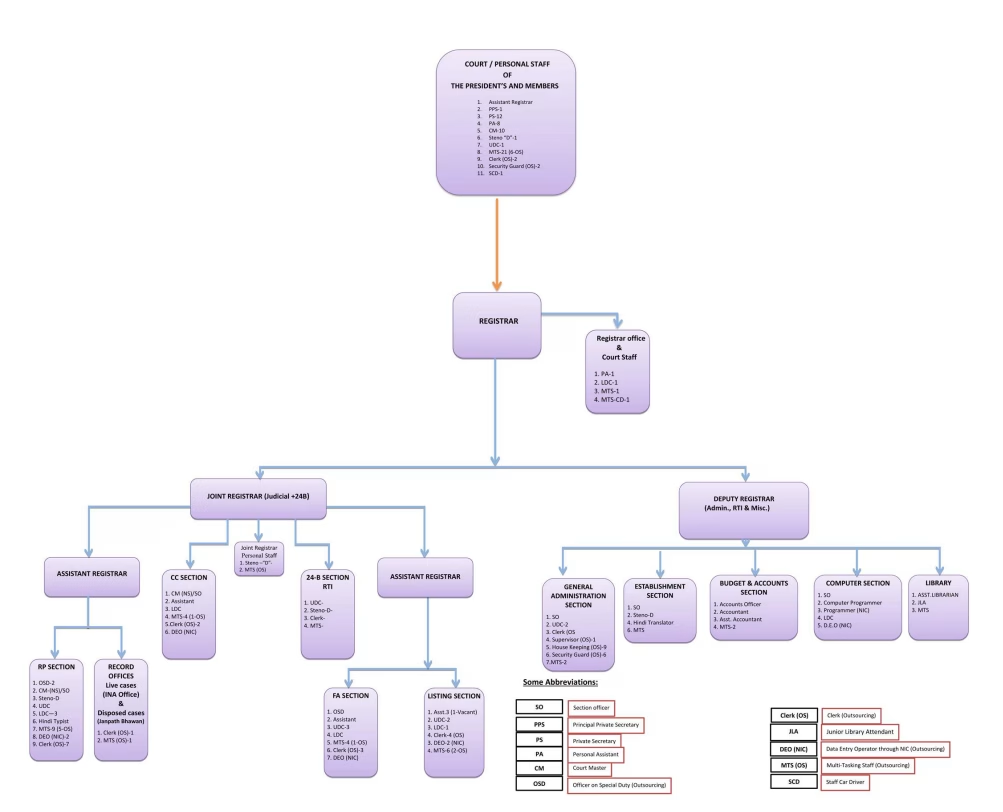
How the NCDRC system functions inside and outside the courtroom.
- Inside the courtroom: the National Commission hears the consumer complaint of the high value, the appeal against the order passed by the state commission (SCDRC) and the revision petition. Proceedings are judicial in nature but less formal than the regular court. Parties may appear in person or through the advocate/lawyer. The commission examines pleadings, evidence, affidavits and the arguments from both sides before passing the order/judgement.
- Outside the Courtroom: The National Commission (NCDRC) System focuses on administrative, digital and procedural support. The complaint can be made through the e-jagriti.gov.in portal, making access easier for the consumer across the country. The registry staff scrutinize the filings, issue notice, manage case listing, and maintain the records. The commission also promotes the alternative dispute resolution by encouraging settlement through mediation where possible. The order/judgement of the National Commission is published online, which ensures transparency and public awareness.
Meaning and purpose of the NCDRC in India.
- The National Commission (NCDRC) is the apex consumer adjudicatory body in India, which was established under the Consumer Protection Act 1986 and continued under the Consumer Protection Act 2019. The meaning of the national commission lies in its role as the highest authority for resolving the consumer disputes, particularly those involving the high-value claim and complex legal issues. It safeguards the rights of the consumer against unfair trade practices, defective goods, and deficiency in services.
- The purpose of the National Commission is to provide the effective, affordable, speedy system of consumer justice. The NCDRC hears original complaints and appeals against the order/judgment of the state consumer dispute redressal commission (SCDRC) and revision petitions to correct the jurisdictional error. The commission ensures uniform interpretation of the consumer law across India and strengthens accountability among manufacturers, service providers, and the traders. Overall, the NCDRC aims to protect the consumer interests, promote fair business practices, and enhance the public confidence in the consumer dispute.
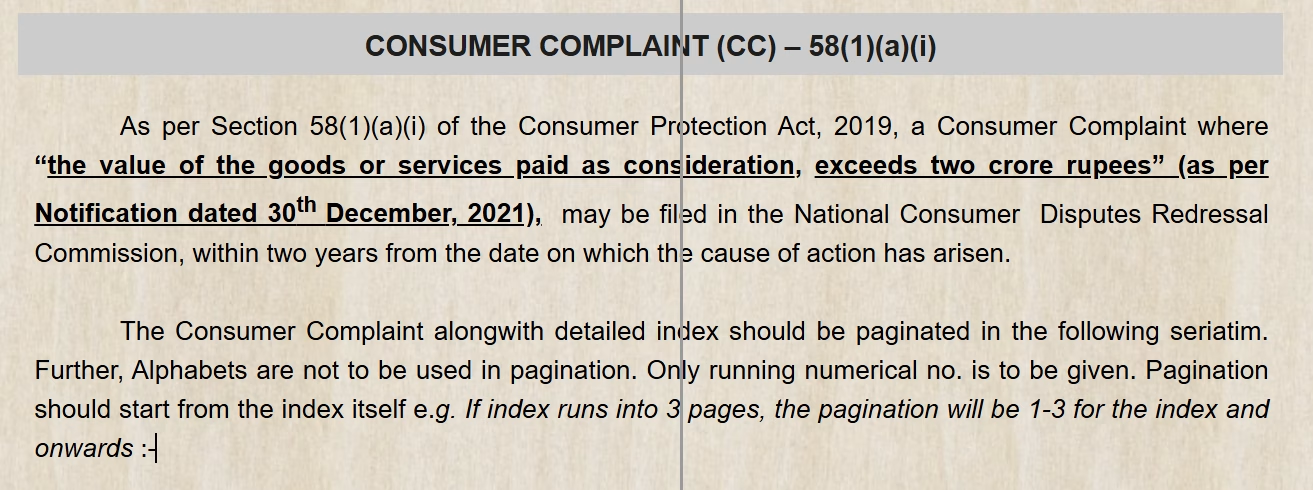
Why the Consumer Protection Act 2019 replaced the old Act 1986.
- The old Act of 1986 was outdated and did not address e-commerce and digital transactions.
- The day-to-day growth of online shopping required stronger consumer protection law.
- The Consumer Protection Act 2019 expanded the definition of consumer and services.
- The introduction of the product liability to fix the responsibility of manufacturers, sellers, and service providers.
- Strict provisions against misleading advertisement and unfair trade practices.
- provision of e-filing of consumer complaints for easy access.
- introduction of the mediation for the speedy dispute resolution.
- The new Act of 2019 overall aims to provide faster, effective, and modern consumer justice.
Type of the cases that can be filed directly before the NCDRC.
- First Appeal (FA) against the order fo the State Commission (SCDRC)
- Second Appeal (SA) arising from the lower Consumer commission’s order/judgment
- Revision Petition (R) to correct the error in the order of the state commission.
- Execution Application (EA) for enforcing orders passed by the NCDRC.
- Miscellaneous Application (MA) for the insured not covered under standard appeal.
- complaint related to defective goods of high monetary value.
- complaints which cover concerns about deficiencies in services like banking, insurance or healthcare.
- cases involving unfair trade practices and misleading advertisements.
- Interlocutory Application (IA) for interim relief, injunctions, or urgent directions.
- complaint under the product liability against the manufacturers or service providers.
Role and power of the National Commission (NCDRC)
The National Commission (NCDRC) serves as the highest consumer forum/commission in India, which plays a crucial role in protecting consumer rights. It hears complaints of high-value cases. The NCDRC has the power to summon the parties, call for the documents/annexures, and enforce its order/judgement. It can also impose penalties on manufacturers, service providers, or advertisers for unfair trade practices. By providing authoritative judgements, the commission ensures uniform interpretation of the consumer law across India.
Key role and the power of the NCDRC.
- NCDRC hears high-value consumer complaints and appeal from the SCDRC
- summons to the parties and examines the evidence to the decide cases
- imposed penalties for unfair trade practices and misleading advertisement.
- Revise the order of the lower forum/commission to ensure justice.
Difference between Consumer Court and Civil Courts.
About Consumer Commission
- The Consumer Commission are the special courts made to solve problems of buyers, like defective products, poor service or unfair trade practices. This is simple, fast and affordable. The consumer can file a complaint themselves, and the court can give the compensation, punish the seller, or order for replacement. Meditation is also encouraged to solve the cases quickly.
About Civil Court.
- The Civil Court handles the general disputes like property issues, contracts between the parties, money claims, accident cases, matrimonial cases, family disputes, etc. The process is formal and slower and usually requires an advocate/lawyer. The court mainly gives compensation or enforces legal rights but does not focus on protecting consumers.
Who can file the consumer complaint and against whom?
- The consumer complaint is filed by any consumer who buys/purchases goods or hires the services for personal use and suffers loss or harassment. The complaint can also be filed by a legal guardian, a consumer association or a group of consumers having the same problem. In case of death of the consumer, the complaint may be filed by the legal representative.
- The consumer complaint can be filed against the seller, manufacturer, service provider, trader or company. The complaint can be filed for the defective goods, poor or deficient services and unfair trade practices and misleading advertisements. The main purpose is to protect the rights of the consumer and provide proper relief.
How can a consumer appear without an advocate?
- The Consumer Protection Act 2019 allows the consumer self-representation.
- The consumer can personally file the complaint before the commission.
- Consumers can write the complaint in simple language.
- Personal appearance of the consumer before the commission is permitted.
- The consumer can not argue the case directly. need to follow the step-by-step process of the commission.
- In the consumer complaint case, no strict legal formalities are followed.
- The process of filing the complaint is consumer-friendly and low cost.
- Legal representation is optional, not mandatory.
The common mistake made by the consumer while filing the complaint.
The Consumer often make common mistake while filing the consumer complaint due to lack of proper understanding before filing it Remember the important point.
- Filing the complaint in the wrong jurisdiction.
- not mentioning the correct value of the dispute amount/claim claim value
- Missing the delay days for while filing the consumer complaint
- not attaching proper documents/annexures or evidence.
- writing unclear or incomplete facts of the case.
- not mentioning the proper party’s name and address in the complaint.
- claiming the relief without the proper legal basis.
- not paying the required court fees while filing the complaint.
- ignoring the notices or hearing dates.
- and the last not following the prescribed complaint format.
The Organization chart helps in better understanding of the consumer system Click here
For more information, visit Home. Click Here
Disclaimer
The content on e-jagriti.com is for general legal awareness and educational purposes only. It does not constitute legal advice. Readers should consult with the qualified legal professional advocate/lawyer before taking any action. e-jagriti.com is not responsible for any loss arising from the use of this information
I had already filed a case in ejagriti. Case Number is DC/AB1/507/CC/86/2025.
The original incident based on which the complaint was raised had happened in last February 2025 . Nearly 1 year is going to complete but till this date no resolution. I request your honour to kindly expedite the issue as I am really fed up with that client (M/s Online CareStore) who are fraudster and has not refunded my money nor even respond to my phone call or emails etc.
What is more worse, I am unable to pursue the case personally as I am physically not comfortable from last 6 months.
Rgds
MURALIDHARAN P
7007526278
Visit the District Consumer Commission and ask the concerned personnel for assistance