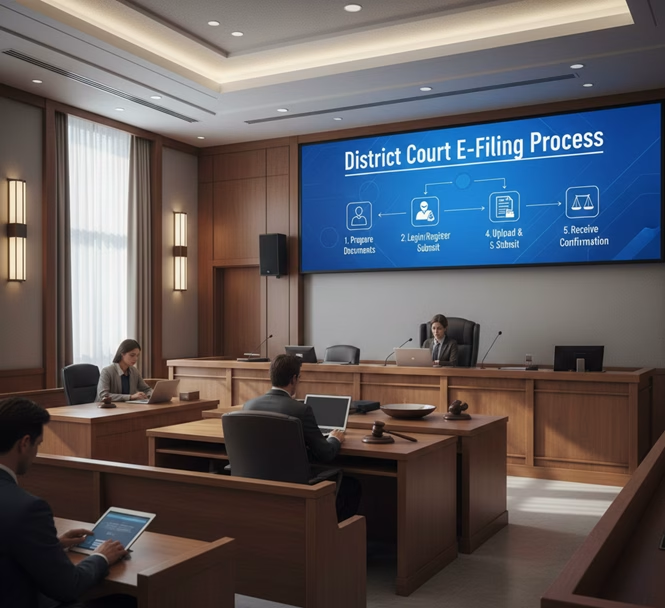
DISTRICT COURT E-FILING PROCESS
A proper guide to e-filing in the Indian District Courts.
How District Court Filing Slowly Changed
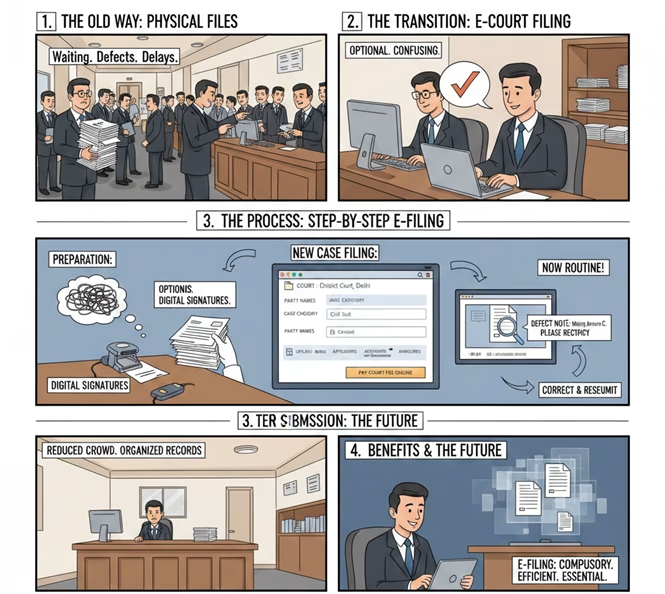
Not very long ago, filing a case in a district court meant only one thing: physical files.
Every advocate remembers standing at the filing counter, waiting for their turn, and sometimes being told to come again the next day because of a small defect.
Over time, courts realized that this system was wasting time for everyone. That is how e-court filing started coming into practice.
It did not happen suddenly. First it was optional, then encouraged, and now in many courts it has become routine.
From My Experience, the shift to e-filing has saved hundreds of hours for advocates/lawyers, and there is no more rushing to the court just for filing
What People Mean by e-Filing
When lawyers talk about e-filing, they usually mean uploading court papers online instead of submitting printed copies first.
In simple terms, e-filing allows you to send your case papers to the court through the internet.
The registry checks those papers on screen. If something is missing, the objection also comes online.
This basic idea is what people now call e-court filing in district courts.
Who Usually Uses e-Filing
In daily court practice, e-filing is mostly used by advocates. Almost every regular practitioner has an account on the portal. Party-in-person cases are also allowed, but in reality most filings are done through lawyers.
Government departments also use eCourt filing through their authorized officers. Slowly, even junior lawyers are becoming comfortable with e-filing because it saves repeated court visits.
If you are a new advocate or litigant in person, make a simple application in an ongoing case to get comfortable; it is much easier than filing a new/fresh suit.
What Is Needed Before Filing Online
Before starting e-filing, some preparation is always required. Documents must be scanned properly. If pages are blurred or cut, objections are almost certain.
Many courts also insist on digital signatures for advocates. Without a proper setup, e-filing becomes frustrating. Once things are arranged, eCourt filing becomes much smoother than physical filing.
Note:- Use a good scanner or app (like Adobe Scan), and scan at 300 DPI, and always convert to PDF/A format for the better result. and also register on https://efiling.ecourts.gov.in early.
Filing a New Case Through the Portal
While filing a new matter using e-filing, the most important thing is choosing the correct court and case category. A small mistake here can delay registration.
Party names must match exactly with the documents. After that, pleadings, affidavits, and annexure are uploaded one by one. Court fee payment is also done online.
This entire e-court filing process, if done carefully, usually takes less time than traditional filing, often just 30 to 60 minutes from home.
Proper guide step by step for New case Filing
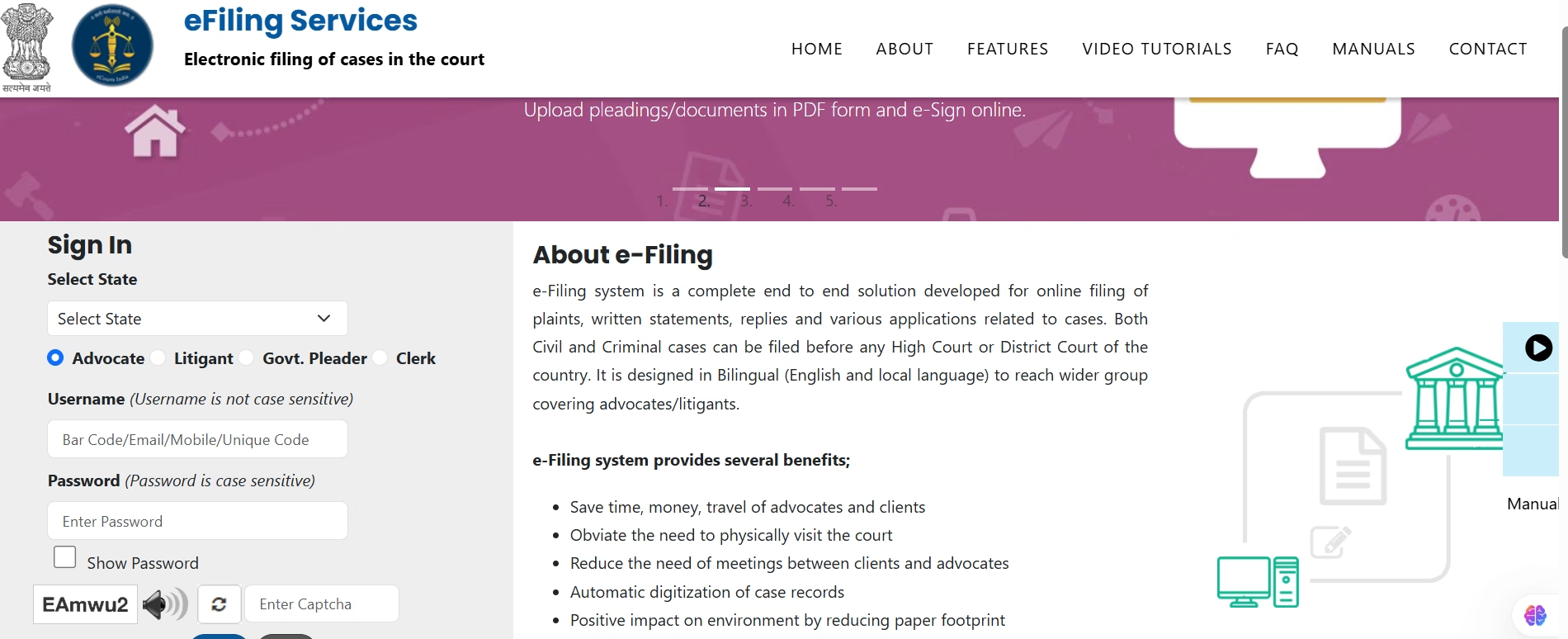
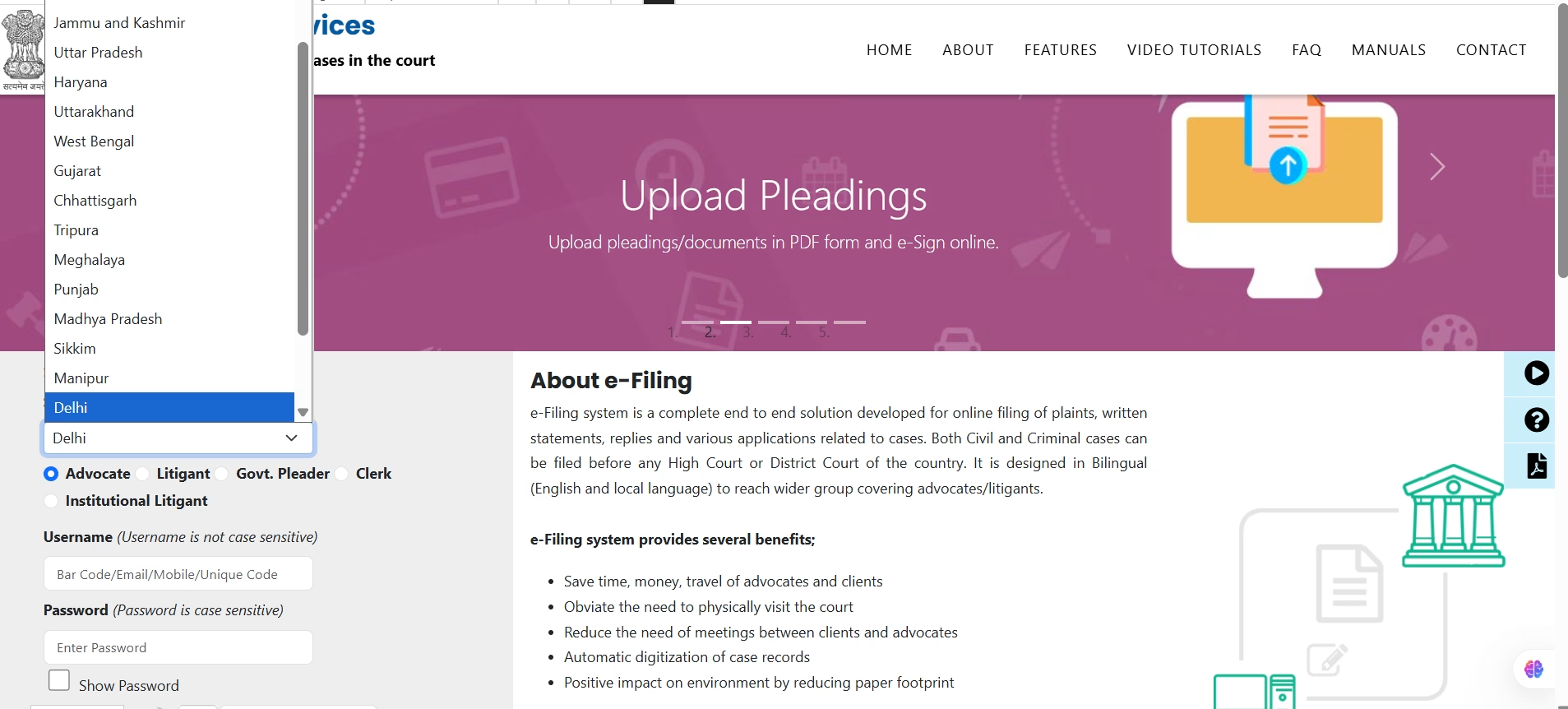
In the first step, log in to efiling.ecourts.gov.in and select your state/district court.
In the second step, New Filing -> correct case type (example: Civil Suit, Criminal Complaint)
In the Third Step, Enter the Party details exactly as in the plaint/suit/documents
In Step Four, upload the PDF file in the pleadings first and then the annexure.
And in the fifth step, pay the court fee online as per your suit valuation and e-sign with DSC.
and the last step. Double-check the jurisdiction; if it is wrong, mention the jurisdiction and then automatically reject it. So please carefully check the jurisdiction before filing.
What Happens After Submission
After submission, the file does not go directly to the judge. It first goes to the registry. The registry checks whether the court fee is proper, whether documents are complete, and whether the court has jurisdiction.
If something is wrong, the defect note appears on the e-filing portal. The advocate then corrects it and resubmits. This online defect process is one of the biggest advantages of e-filing.
Case Registration and Further Use
Once defects are cleared, the case is registered and a case number is generated.
From that point onward, the e-court filing can be used again and again in the same case, and the applications, replies, written statements, and additional documents can all be filed through e-filing, and this process reduces the paperwork and keeps records organized.
Practical Benefits Seen in Daily Court Work
In real practice, e-filing has reduced unnecessary crowds at filing counters. Lawyers can manage time better.
Documents do not get misplaced easily. E-court filing has also helped courts maintain cleaner records. Though some courts still ask for physical copies later, the main filing work now happens online, saving public money and time.
In the year 2025, the High Court and District Court fully adopted the e-filing rules, which saved money and time.
Common Problems Lawyers Still Face
Despite advantages, e-filing is not perfect. Server issues, slow websites, and unclear defect notes still cause trouble.
In recent issue, in states like Tamil Nadu, the Advocates protested mandatory e-filing due to servers crashed and limited help booths, demanding temporary suspension until fixed
That said, most lawyers agree that eCourt filing is still better than the old system if used patiently.
As per my advice to avoid problems.
- File early in the morning or late in the evening to avoid the peak load.
- Keep screenshots of important steps.
- If there is a problem, then contact the court helpdesk for unclear objections.
How Things May Look in the Future
District courts are clearly moving towards more digital work. E-filing is no longer seen as something new.
With time, e-filing is likely to become compulsory everywhere. As lawyers and court staff gain experience, eCourt filing will continue to improve and become more reliable.
Final Conclusion
Ecourt filing has changed how district courts function on a daily basis. It has not removed all problems, but it has reduced many old difficulties.
Once a person understands e-filing properly and uses it carefully, the system becomes helpful rather than confusing.
Like every reform, e-filing is still evolving, but it is now an essential part of court practice.
Quick FAW for common questions on the District Court efiling 202-26
- Is e-filing mandatory? -> Not mandatory everywhere yet, but in the court under the 25 High Courts of India, it’s increasingly required, especially for government cases.
- Can a party in person file? -> Yes, the party in person filed and registered as a litigant and filed without an advocate/lawyer.
- What if the server is down? -> Many courts allow the (online filing + physical filing) for urgent matters. The litigant and lawyer visit the court in the filing section if the server is down for more queries.
- Best resource? -> Official Portal https://efiling.ecourts.gov.in and Local Court Notification.
Visit Home. Click Here
OFFICIAL E-COURT FILING WEBSITE
| Service | Link |
|---|---|
| e-Filing Portal (All Courts) | https://filing.ecourts.gov.in (filing.ecourts.gov.in) |
| eCourts Main Portal | https://ecourts.gov.in/ecourts_home/ (ecommitteesci.gov.in) |
| Delhi District Court e-Filing Info | https://delhidistrictcourts.nic.in/efiling (delhidistrictcourts.nic.in) |
Disclaimer
The content on e-jagriti.com is for general legal awareness and educational purposes only. It does not constitute legal advice. Readers should consult with the qualified legal professional advocate/lawyer before taking any action. e-jagriti.com is not responsible for any loss arising from the use of this information.
How to pay court fee?
Check whether you have a video tutorials in your website. First you must be clear in the process. Simply stating practice what you preach.
Shame on the system you follow. None of your employees deserves it. Educate them before you upgrade.
I hope there will be no one to read this and correct your mistakes.
Register on the login
Create an account or log in at e-jagriti.gov.in with your mobile/otp and email ID.
Start New Case
After logging in, go to your dashboard (file new case -> select consumer complaint
enter your case details
Provide the details, such as amount paid, amount claimed, cause of action, state and district, etc.
the portal use the details to calculate with the consumer forum/commission (district/state/national).
Upload the required pdf, index, frofoma, pleadings, complaint affidavit, and annexures/documents
After entering your details and uploading the documents/annexures, the portal prompts you to pay the court fee online.
The amount depends on your claim and jurisdiction.
and submit online. The portal give you unique reference/diary number/acknowledgement.
Note:-
the amount depends on the claim and jurisdiction).
Upload required PDFs (Index, Proforma, Complaint, Affidavit, etc.) as prompted
Hi I successfully submitted application and got reference number. Do I need to submit the hard copies in court for registry checking and all?
Yes, After successful online submission, the consumer is required to submit hard copies before the Commission.
Generally the consumer is required to submit the original set plus copies for the service. For example. If there is one opposite party, then two sets for the commission and one set for the opposite party and in addition to one set for the consumer’s own record. Total 4 Sets.
However, the consumer should always confirm from the registry of the DCDRC, SCDRC and NCDRC depending upon where the case is filed.
What to do for not getting the parcels from Dtdc kalady 683574
Dear Sir.
First, Contact the supplier and the e-commerce website through chat or email. If there is no response or the dispute is not resolved. you may send a legal notice through an advocate/lawyer.