HOW TO CHALLENGE AN ORDER OF CONSUMER FORUM
INTRODUCTION
- That this article provides you with a clear, practical and legally accurate detailed guide on how an aggrieved consumer/service provider can challenge the order passed by the District Consumer Dispute Redressal Commission (DCDRC) before the State Consumer Dispute Redressal Commission (SCDRC) under the Consumer Protection Act 2019.
- And instead of using the complex legal jargon and this detailed guide, explain the appeal process in simple language, focusing on the real procedural steps, timelines and jurisdiction rules, fees, drafting the strategy and common mistakes. Our aim is to help consumers, advocates/lawyers and litigants understand their rights and remedies in a transparent manner.
Which orders can be challenged before the State Commission?
- Under the Consumer Protection Act 2019, the State Commission (SCDRC) exercises two kinds of jurisdiction.
APPELLATE JURISDICTION
- if any party is aggrieved by the order which passed by the district Commission (DCDRC), the consumer has a statutory right to file an appeal before the State Commission (SCDRC)
and this includes cases where,
- Relief was wrongly granted or denied by the commission/forum
- Compensation is inadequate or excessive, granted by the commission/forum
- Law or procedure was incorrectly applied by the Commission/forum
ORIGINAL JURISDICTION
- In the original jurisdiction, the State Commission can also directly entertain the complaint where the pecuniary value of the claim falls within the monetary limits which are prescribed for the State Commission under the Government Notification.
Important Point noted
-
The appeal is a legal right, but it must strictly comply with the limitation period and procedural requriement, otherwise it may be dismissed by the commission.
- Pecuniary jurisdiction –> After the 2019 Act and subsequent rules, the monetary limits were revised. In the rules notified under the Act, the District Commissions, State Commissions and National Commission have distinct monetary bands (examples from government notifications): District Commissions handle cases up to a lower limit; State Commissions handle cases above that amount up to a higher limit; the National Commission deals with still larger claims. The central notification set broad bands for the three tiers. Practically, State Commissions now entertain complaints originally where the value of goods/services paid as consideration is above the District Commission limit and up to the State Commission limit.
- Territorial jurisdiction: A complaint or appeal may be filed where the opposite party resides, carries on business, or where the cause of action arose. For appeals, the territorial jurisdiction is the State Commission of the State in which the District Commission sits (i.e., appeals from the District Commission go to the State Commission of that State). The specific provisions and rules in the CPA 2019 and subordinate rules govern the place of filing.
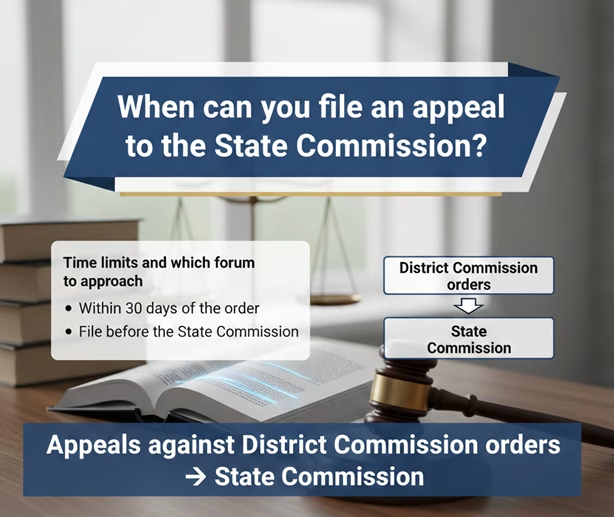
When can you file an appeal to the State Commission?
- Who may appeal: Any person who is aggrieved by an order passed by the District Commission (DCDRC) may file an appeal before the State Commission (SCDRC).
- Time limit-> The statutory time differs depending on the stage of appeal. (District->State, State->National). For appeals from the District Commission to the State Commission, they commonly apply the fixed period, which refers to 45 days for this first appeal. and the State Commission has discretion to condone delay if the sufficient cause is mentioned in the appeal. and the appeals from the State Commission to the National Commission, the period is shorter, which is 30 days from the date the certified copy of the order/judgement was received by the parties.
JURISDICTION OF THE STATE COMMISSION (SCDRC)
- There are two type of jurisdiction (Pecuniary and territorial jurisdiction).
- Pecuniary Jurisdiction (for the Money Value) – Under the Consumer Protection Act 2019, the jurisdiction is decided on the consideration paid for goods or services.
Forum Pecuniary Limits
-
- District Commission ————————-> Up to the prescribed lower limit.
- State Commission —————————> Above District Limit up to State Limit
- National Commission ——————– —> Higher Value Dispute
Always Calculate
- Value of the goods or services plus compensation claimed.
- Wrong calculation, which may result in dismissal for lack of jurisdiction.
Territorial Jurisdiction
The appeal or complaint can be filed where?
- The opposite party resides or carries on the business
- cause of action arise (fully/partly)
- The District Commission (DCDRC) that passed the order is situated for the appeal.
- The appeal must be filed in the State Commission of the same state.
Grounds for challenge (what to argue in the appeal before the State Commission)
The appeal before the State Commission is a statutory remedy; the consumer must show sufficient legal or factual error in the District Commission’s order/judgement.
Common ground.
- Error in Law. wrong interpretation and non-application of statutory provisions/binding precedents.
- Error of fact. Finding not supported by the evidence or based on assumption.
- Violation of Natural Justice. No hearing, denial of the documents or procedural unfairness.
- Excess / defect in the relief granted. either inadequate compensation or relief beyond what law permits.
- Jurisdictional error. The District Commission lacked the authority to entertain the case.
- New evidence. very limited The State Commission may admit fresh evidence only in rare circumstances (explain why it wasn’t available earlier).
- Improper Relief. Excessive or inadequate compensation.
Practical note: always comply with the local practice directions of the particular state commission; the formats and procedural nuances differ across states.
PROCEDURE TO FILE AN APPEAL BEFORE THE SCDRC: A STEP-BY-STEP GUIDE
- obtain the certified copy from the District Commission (DCDRC)
- Draft Memorandum of Appeal with clear grounds
- Attached the important document/annexures and index properly.
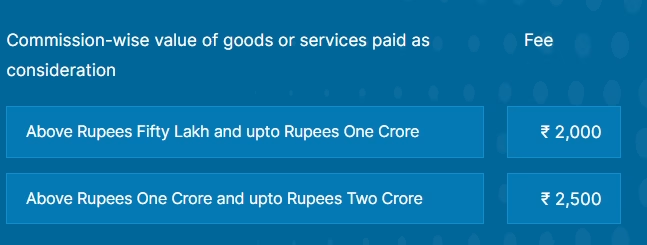
- Pay the prescribed court fees at the time of filing the appeal. The fee depends on the claim value, generally ranging between Rs100 and Rs4000, and always confirm with the state commission registry.
- File the appeal online first and submit the physically hard copy before the State Commission (SCDRC)
- Serve the copy of the appeal to the opposite party.
- Attend the admission hearing and seek a stay if required.
- Incorrect fee—-> defective filing
Registry compliance is mandatory; otherwise, the appeal may not be listed.
- Important: some states demand court fee stamps on the appeal or fee receipt; others require prescribed court fees under the State Court Fees Act. Before filing an appeal, contact the State Commission and take the format of the Appeal and then start to draft and file.
Filing directly in the State Commission – when is this permitted?
- You can file a complaint originally in the State Commission (i.e., not as an appeal) when the pecuniary value of the complaint (value of goods/services plus compensation claimed) falls within the monetary band allocated to the State Commission. After the 2019 Act and the 2021 rules, the central notification defined the monetary brackets for District/State/National Commissions. If your claim is in the State Commission, the consumer may file the complaint directly in the State Commission. Otherwise, file in the District Commission (or National Commission if above the State band). Always compute the value of the goods/services carefully and include the compensation claimed.
E-filing, portals and online practice
- The Consumer Protection supports online registration and e-filing in many states by the portals such as the National Consumer Helpline (NCH) and state e-jagriti.gov.in portals. These portals allow grievance registration, uploading documents, tracking the case status, and sometimes payment of filing fees. Where e-filing is available, follow the portal’s instructions for document types, size limits, and format. Keep digital certified copies and ensure hard copy submissions follow the registry’s directions when required.
(E-filing and Online Portals) Consumer Commission support digital filing through the
- e-Jagriti portal, i.e., e-jagriti.gov.in, along with physical filing.
- National Commission Helpline number
and this platform allow
- case tracking
- uploading documents
- online payment
- case status
- cause list
- display board of all commissions. (DCDRC, SCDRC, and NCDRC)
- Final Judgement/Daily Order.
Practical checklist for preparing the appeal
- Certified copy of impugned order (get immediately).
- Chronology of proceedings and list of hearings/important dates.
- Grounds reduced to crisp legal/factual points (no long narrative).
- Copies of evidence relied on (exhibits), orders, and pleadings in the lower forum.
- Index and paginated appeal papers.
- Fee payment receipt / court fee stamps as per the state schedule.
- Proof of service on the opposite party.
- If delay condonation is required, an affidavit explaining the delay with evidence is needed.
- Written submissions/brief for admission stage (short).
- If seeking an interim stay, draft an urgent application and provide evidence of irreparable harm.
What remedies can the State Commission grant on appeal?
The State Commission can grant
- Confirm, set aside the order, or modify the District Commission’s order/judgement.
- Remand the matter for fresh consideration with directions.
- Order compensation, interest, refund, replacement, or other remedies as per the Consumer Protection Act 2019.
- Direct costs and incidental directions.
If the State Commission finds the District Commission lacked jurisdiction, it may quash the earlier exercise and possibly remit the matter.
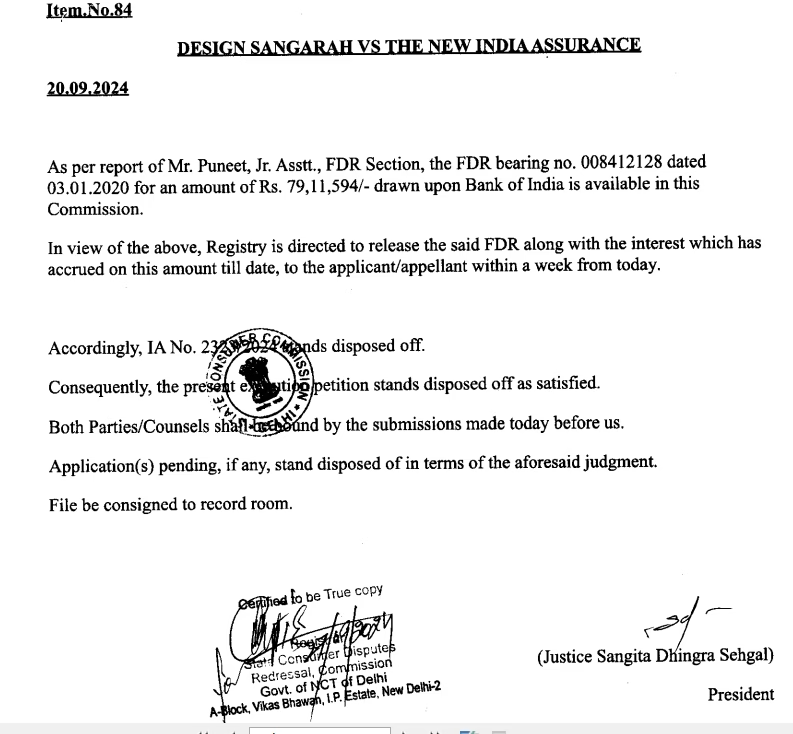
Common mistakes that lead to dismissal of the matter/case
- Late filing
- Missing Certified Copy
- wrong jurisdiction
- No legal Ground
- Improper fee payment
- Not stay application
- Not proper prayer
Conclusion: strategic approach for practitioners
- Challenging the consumer commission/order required speed, accuracy and legal clarity. Most of the appeals fail not due to weak cases, but due to procedural lapses. When correctly computing limitation, drafting, focusing on the ground and following the Registry rules, then an aggrieved party can effectively seek justice before the State Commission.
Five most important official/secondary references used while preparing this article
- The Consumer Protection Act, 2019 (official Act text).
- Central notification / PIB release on pecuniary jurisdiction (district / state / national bands).
- Practice and timelines discussion for appeals (practitioner sources summarising the appeal period District->State and State->National).
- E-filing / National Consumer Helpline guidance on filing and grievance portals.
- Practical notes on filing fees for consumer matters (practitioner guides)
Supreme Court of India and E-jagriti.gov.in Information
- Supreme Court of India official website: Click Here
- e-Jagriti Portal official website: Click Here
Frequently Asked Questions => FAQ
Can I appeal against every district commission order/judgement?
- Yes, if a consumer is aggrieved with the order passed by the District Commission (DCDRC), the party can file the appeal before the SCDRC and file within the limitation.
What is the appeal limitation time?
- 30 days but usually 45 days, subject to condonation?
Is a lawyer mandatory?
- No, but legal assistance is advisable but in the complex cases lawyer is required
Can the State Commission (SCDRC) re-examine evidence?
- only if findings are perverse or illegal.
Can a new document be filed in the appeal?
- Rarely, only with strong justification.
What happens if an appeal is filed late?
- It may be dismissed as time-barred.
Is online filing valid?
- Yes, through the e-Jagriti portal, the official website e-jagriti.gov.in, along with physical.
Can the State Commission stay the order of the District Commission/Forum?
- Yes, but it is discretionary.
What if the jurisdiction was wrong?
- The order can be set aside immediately.
Can compensation be enhanced in the appeal before the State Commission (SCDRC)
- Yes, if legally justified.
For More Updates, Click Here
Disclaimer
The content on e-jagriti.com is for general legal awareness and educational purposes only. It does not constitute legal advice. Readers should consult with the qualified legal professional advocate/lawyer before taking any action. e-jagriti.com is not responsible for any loss arising from the use of this information.
what is the limitation to file an appeal against District Forum order before State Commission? 30 days or 45 days?
To challenge a District Forum order, you must file an appeal with the State Commission within 45 days (sometimes cited as 30 days, but 45 is common for District to State), showing sufficient cause for delay, and crucially, deposit 50% of the amount ordered if you are the paying party
To challenge a District Forum order, you must file an appeal with the State Commission within 45 days (sometimes cited as 30 days, but 45 is common for District to State), showing sufficient cause for delay, and crucially, deposit 50% of the amount ordered if you are the paying party