HOW TO DRAFT LEGAL NOTICE
In this article, I will explain to you how to draft the legal notice and cover important points, such as the heading, subject, body, issues, contents, when to send the notice, the importance of the legal notice, how it is a legal document, how the court can rely on the legal notice and how the legal notice is effective. I will also explain how much an advocate charges if they draft the legal notice.
Heading of the Legal Notice
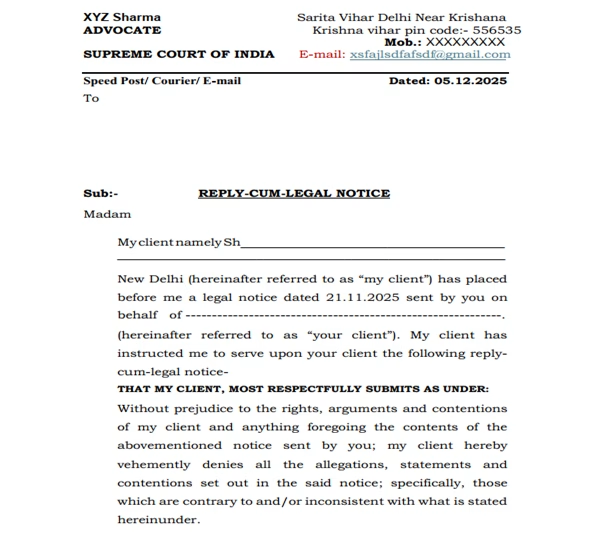
- The heading of the legal notice identifies the documents clearly. It usually includes a legal notice at the top of the notice along with the name of the sender and address and dates.
- A proper heading which ensures the notice is recognized as an official legal document.
- In the legal notice of an advocate, the heading clearly mentions ‘Legal Notice’ at the top and is followed by the name and address of the sender (through the advocate). It also included the date. This formal heading shows that the notice is legally drafted and signed by the lawyer/advocate.
Body of the Legal Notice
- The legal notice contains the main message in the body and the purpose of the notice. The body clearly explains the facts of the case, the legal issues involved and the claim of the sender or demand. It may include the reference of law. previous communication and deadlines. The language in the legal notice should be formal, precise and professional, as the court may rely on the legal notice.
Contents in the Legal Notice
- Details of the sender. Name, address, and contact information of the person sending the notice through an advocate.
- Details of the recipients, Name and address of the person to whom the notice is being send
- Date: The date on which the notice is issued.
- facts of the case, A brief and clear explanation of the events or dispute
- Legal ground: reference to the legal law supporting the claim of the sender.
- Demand/relief south: what the sender want from the receiver of the legal notice, (payment, action, or compliance)
- Time limit, A deadline within which the receiver should respond.
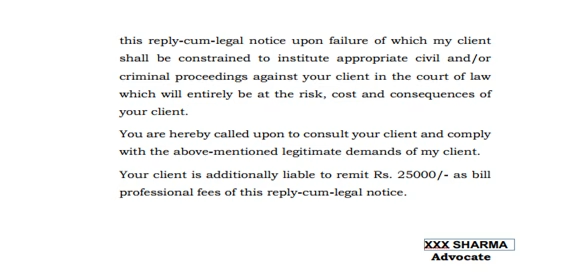
- Consequences of non-compliance. The receiver is not compliant; possible legal action.
When to send the legal notice.
The legal notice should be sent before approaching the court.
- You demand something from the other party (payment, delivery, compliance with the performance of the contract, etc.).
- You want to inform the other party about your grievance and give them the chance to resolve it as soon as possible.
- You need to create the legal record which shows that the other party was informed about the issue.
- You wish to avoid the unnecessary litigation by trying to settle the case/matter outside the court.
Important of legal notice
- The legal notice is an important document/piece of evidence because it creates a formal written record of the dispute and demand made by the parties. It helps in the future by showing that the sender acted lawfully and gave a fair opportunity to resolve the matter. The court has relied on the legal notice to understand the facts, intention and the timeline of the events. It also strengthens the case of the sender and may help in the early settlement without the litigation.
How the Court can rely on the legal notice
- The court can rely on the legal documents because it is the formal legal document issued before the filing of a case. It shows the facts of the dispute, the demand and the legal claim raised by the sender. The legal notice helps the court to understand the intention, conduct and timeline of the parties and it also proves that the other party was given the fair opportunity to resolve the case/matter before the litigation.
How the legal notice is effective.
- There is no single law that mandates sending the legal notice in every case; Indian law clearly recognises its legal value. Under Section 80 of the Code of Civil Procedure 1908, serving the legal notice is mandatory before filing the lawsuit against the government or public officer and the same Section 138 of the Negotiable Instrument Act 1881 makes it compulsory to send a legal notice in cheque dishonor cases and in contractual disputes, the legal notices are issued under the principle of the Indian Contract Act 1872 to demand the performance of compensation. Courts rely on such notice to assess intent, conduct and compliance with statutory requirements.
How much an advocate charges for the legal notice.
The fee for the legal notice drafting and sending varies widely based on experience, complexity of the case and city of practice. There is no fixed govt.-prescribed rate for the legal notice. Advocates decide their own fees.
As per my experience charge range.
- For the simple notice, Rs 1,000/- to 5,000/- approx. (matter like money received and basis dispute)
- Standard Advocate Fees: Rs1,500/- to Rs7,000/- (common range for many civil legal notice)
- Mid-level advocate fees. Rs3,000/- to Rs10,000/- (depending on the experience and issues’ complexity)
- Complex or corporate legal notice: Rs10,000/- to Rs25,000/- or more for complicated dispute (contract dispute, property disputes, defamation disputes, etc.).
Note:- Affecting the cost of the legal notice are the experience of advocate and reputation, complexity of the facts or legal issues, urgency and time spent drafting and additional services (like consultation, revisions, etc.).
Format of Legal Notice: Click Here
Disclaimer
The information provided in this article is only for general legal awareness and educational purposes only. It does not constitute legal advice or legal opinion. Law and procedures may vary depending on the facts and circumstances of the case. Readers are advised to consult a qualified advocate/lawyer before taking any legal action. The author and website shall not be responsible for any loss or damages.
For More Information, Visit Home. Click Here
Disclaimer
The content on e-jagriti.com is for general legal awareness and educational purposes only. It does not constitute legal advice. Readers should consult with a qualified legal advocate/lawyer before taking any action. e-jagriti.com is not responsible for any loss arising from the use of this information.