How to file a Regular First Appeal
In this article, I will explain how to file a Regular First Appeal before the High Court and address the common issues related to the Regular First Appeal (RFA) and this article will cover the following 8 points.
- In RFA, which order/judgement can be challenged before the High Court?
- Under which section the Regular First appeal is filed (Section 96 of CPC)
- Who can file the Regular First Appeal (Aggrieved Party)
- Jurisdiction of the High Court.
- What is the imitation period for filing the regular first appeal?
- Requirement of the certified copy of the order/judgment and decree
- Which document is required for filing the regular first appeal?
- Is an advocate necessary for filing the regular first appeal?
- what is the role of the advocate whether advocate is necessary
In RFA, which order/judgement can be challenged before the High Court?
The Regular First Appeal is filed before the High Court against the final order/judgement and decree passed by the Civil Court and it is governed by section 96 of the Code of Civil Procedure, 1908 (CPC).
The appeal lies only against a decree, not against every order. The decree is the formal expression of the final decision that conclusively determines the right of the parties.
The Final order/judgment and decree in civil suits such as
- property disputes
- money recovery cases
- contractual disputes
- and declaration and injunction suits.
- Ex parte decree where the case was decided by the court in the absence of the party.
- and the decree was passed after the full trial, which involved appreciation of facts and law.
- original civil jurisdiction matter, where the trial court has finally decided the case.
Parties are remember that the following cannot be challenged through the Regular First Appeal (RFA)
- Interlocutory application or interim order (temporary order)
- any order passed during the pendency of the suit.
- criminal court’s order/judgment
- order where the appeal is specifically barred by law.
Important point Related to the RFA: the High Court can examine the facts and law. This means that the High Court can reappreciate evidence, review findings, and correct legal errors made by the trial court.
Under which section the Regular First appeal is filed (Section 96 of CPC)
- That the Regular First Appeal is filed under section 96 of the Code of Civil Procedure, 1908 (CPC). According to this section, the appeal can be filed against the decree passed by the trial court. The decree means the final decision of the civil court which decides the right of the applicants/parties and the appeal can be filed when the parties aggrieved with the order/judgement think it is wrong, unjust or passed without properly considering the facts or law.
- That one important point of Section 96 is that the High Court can examine both facts and law. This means that the court can review evidence, documents, and legal points again before giving its decision.
who can file the Regular First Appeal (Aggrieved Party)
The Regular First Appeal can be filed by any person who is aggrieved by the order/judgement or decree passed by the Civil Court and the aggrieved party means the person whose legal rights or interests are affected by the court’s decision.
Generally the following persons can file the Regular First Appeal.
- Plaintiff – if the plaintiff is not satisfied with the decree or judgement which passed by the trial court, either fully or partly. In these circumstances, he or she can file the Regular First Appeal.
- Defendant: If the defendant feels that the decision of the trial court is not correct/wrong, unjust and against the law, the defendant can also file the Regular First Appeal.
- Legal Heirs/Representatives: if the plaintiff or defendant dies, then their legal heirs or legal representatives can file the appeal.
- And if any person is directly affected by the decree or judgement – even if a person was not a main party, but the decree affects their legal right – such a person may file an appeal with the permission of the jurisdiction court.
Jurisdiction of the High Court for the Regular First Appeal (RFA)
- Meaning of the jurisdiction: Jurisdiction means the power of the court to hear and decide the case.
- Law Governing Regular First Appeal:- Regular First Appeal filed under Section 96 of the code of Civil Procedure 1908 (CPC)
- Which court has jurisdiction? If the decree is passed by the civil judge, the High Court of the state has jurisdiction to hear the Regular First Appeal and if the decree is passed by the civil judge, the appeal lies before the District Court, unless the law provides otherwise.
- Territorial Jurisdiction:- The appeal must be filed before the appellate court within whose territorial limits the trial court is situated.
- Pecuniary Jurisdiction:- The Jurisdiction also decided depand on the value of the suit 1. Higher-value cases usually go to the High Court of the State. 2. Lower-value cases go to the District Court.
- Subject Matter Jurisdiction:- Special law provides the specific appellate forum; in such cases the appeal must be filed as per that special law.
- Appeal only against the decree:- The Regular First Appeal (RFA) can be file only against the decree, not against an interlocutory order (Under Section 96 of the CPC)
What is the imitation period for filing the regular first appeal?
- Limitation period: in the Regular First Appeal, there is a 90-day limitation period for the High Court and a 30-day appeal to the District Court as per the Limitation Act 196.
Requirement of the certified copy of the order/judgment and decree
Mandatory Document for filing the Regular First Appeal
- Certified copy of the judgement or decree; this is compulsory for filing the first regular appeal under section 96 CPC.
Order sheet if required
- In some courts, the certified copy of the last order is also required.
Limitation Calculation
- The time taken for obtaining the certified copy is excluded while calculating the limitation period.
No Appeal without the decree
- The appeal cannot be entertained without the certified copy of the decree, except where exempted by the court rules. by exemption application.
Important point to remember while arranging the documents for filing the Regular First Appeal (RFA)
- Ensure the case number, parties’ names, and court details match exactly on all certified copies.
- The copy must be clear, complete and readable on all pages.
- proper indexing
- Arrange the documents properly as per the High Court filing rules.
- check that each certified copy has the court seal and certification.
- Verify the date of the judgement and decree for the correct limitation calculation.
- attached the required true copies for the respondents along with the appeal
- marked the judgement and annexures properly as document numbers/annexures.
Is an advocate necessary for filing the regular first appeal?
- As per the law, the person can appear in the court personally (called ‘party in person’).
- But for the Regular First Appeal. Legal knowledge is required. Therefore an advocate is strongly recommended.
- In the High Court, the procedures are complex, and filing without an advocate is very difficult.
- Wrong drafting, missing documents or limitation error may lead to dismiss of the (RFA)
Role of an Advocate
- The advocate plays an important role in properly defending the matter, because the advocate explains the law properly, and the court procedure and chances of success in the appeal are higher.
- Drafting the Regular First Appeal: The Advocate prepares the appeal, ground of appeal, application, and affidavit in proper format.
- Filing the case: The advocate filed the appeal in the court and ensured all documents were complete and correct.
- Arguing the case before the Court: The Advocate presents arguments before the Court and answers the questions of the judges properly and in a legal way.
- Court procedure: The advocate knows the court rules, limitation period and filing requirements.
- Protecting the client’s legal rights: The advocate ensures that no legal mistake is made which may harm the case.
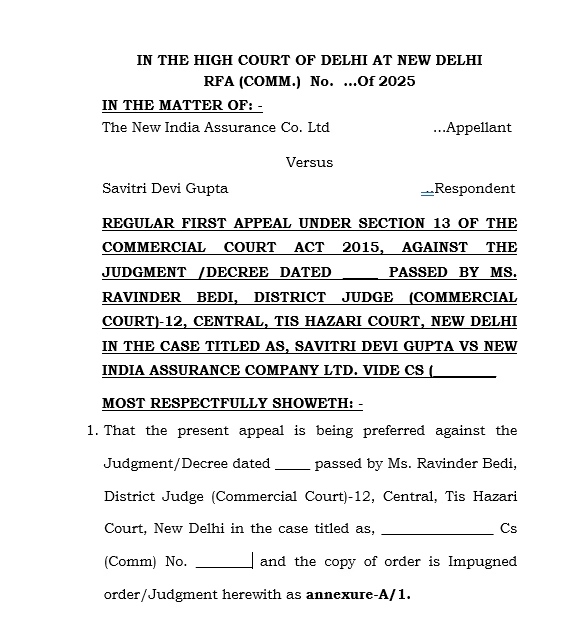
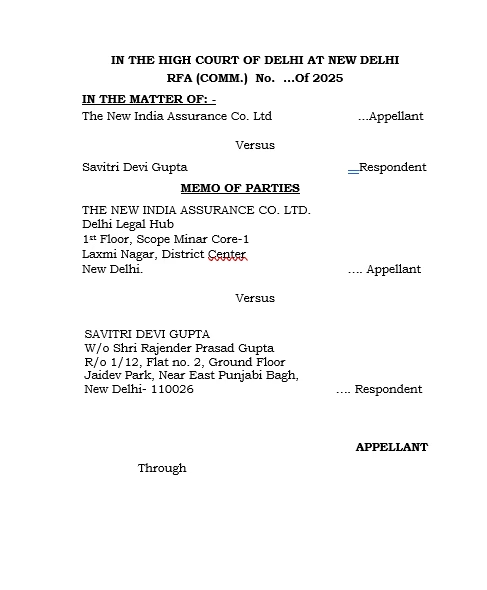
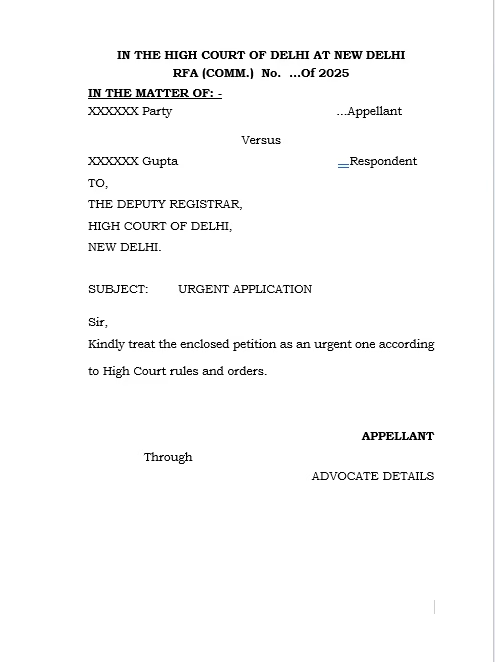
In the above article, I have attached an image of the RFA for the reference. If you need further help, please visit the youtube channel for a video regarding the Regular First Appeal. Click here.
You can also visit the Devgan Law Library, which explain the chapter on appeal, including Section 96 and other Click Here
For more information visit Home. Click Here
Disclaimer
The content on e-jagriti.com is for general legal awareness and educational purposes only. It does not constitute legal advice. Readers should consult with the qualified legal professional advocate/lawyer before taking any action. e-jagriti.com is not responsible for any loss arising from the use of this information.
The information is very informative for consumers