HOW TO FILE WRIT PETITION IN INDIA
In this article, I will explain how to file the writ petition before the High Court of State and the Supreme Court of India. I will also explain what remedies are available under the writ petition and what the process is to file the writ petition before the court. A writ petition is one of the most powerful legal remedies available in India and it allows citizens of India to approach the High Court or Supreme Court directly when their fundamental rights are violated. This article covers understanding who to file the writ petition with and is essential for everyone seeking justice without going through lengthy lege procedures and this article covers the following points.
- What is the writ petition in India
- Constitutional Provision for the Writ Petition
- Purpose of filing the writ petition
- who can file the writ petition in the High Court or Supreme Court.
- Types of Writ in India.
- Remedies Available under the Writ Petition
- Jurisdiction of the High Court and Supreme Court
- When to Approach the High Court or Supreme Court.
- Document required for the writ petition while filing before the High Court or Supreme Court.
- Role of the Advocate in the writ petition. Is it Necessary?
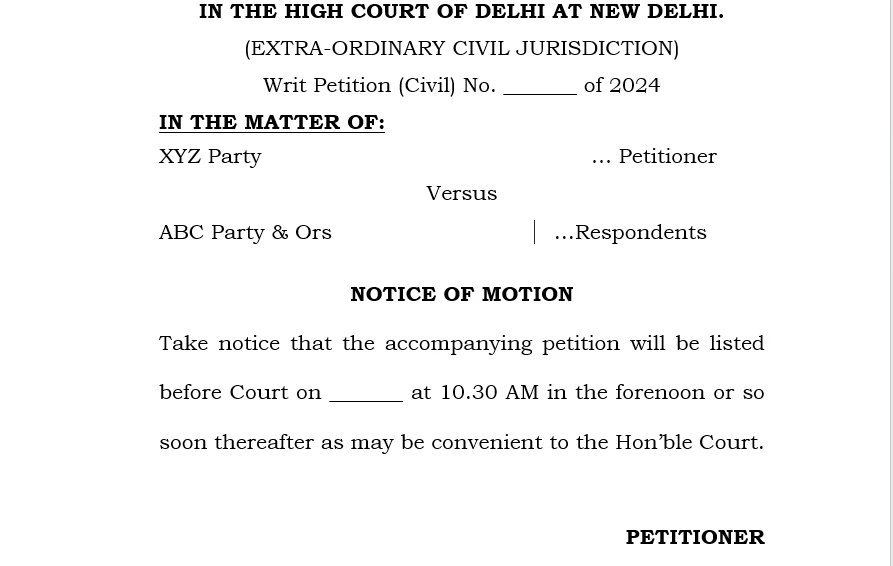
What is the writ petition?
The writ petition is the legal petition filed under the constitution of India to seek the court’s intervention against the illegal action by the govt., public authorities, or even the court. It is primarily used to protect the fundamental rights under Articles 12 to 35 of the Indian Constitution. But it can also address other legal violations.
- The writ petition can be filed directly in the Supreme Court of India in Article 32 or in the High Court in Article 226.
- The writ petition is a constitutional remedy, which means the court has the authority to act immediately and issue an order/judgement regarding the writ.
- The writ petition does not require the prior civil case; it is independent of other legal procedures.
Constitutional Provision for the Writ Petition
Article 32 of the Indian Constitution
- Article 32 gives the right to approach the Supreme Court of India directly for the enforcement of fundamental rights.
- The Supreme Court of India has the power to issue writs.
- Dr B.R. Ambedkar called Article 32 is the heart and soul of the Constitution.
Article 226 of the Constitution of India.
- Article 226 gives the power to the High Court of the State to issue writs.
- The High Court can issue the writs not only for the fundamental but also for the other legal rights.
- Types of Writs which apply for Both Supreme Court and High Court
- Habeas Corpus, Mandamus, Certiorari, Prohibition, and Quo Warranto.
- Nature of Right: Article 32 itself is a Fundamental Right and Article 226 is the constitutional remedy.
- Territorial scope: The Supreme Court of India has all india jurisdiction and the High Court exercises jurisdiction within the state or territorial limits.
Purpose of filing the writ petition
- To protect the fundamental rights of the person
- to get quick relief from the High Court or Supreme Court of India
- to challenge the illegal, unfair, or arbitrary action of the govt. or authorities.
- To stop the authority from misusing its power.
- To compel the public authority to perform its legal duty.
- To correct the wrong order/judgement passed without following law or procedures.
- to maintain the rule of law and prevent injustice.
In simple words, the writ petition is filed to seek immediate justice from the High Court or Supreme Court of India when the government authority acts wrongly or unlawfully.
who can file the writ petition in the High Court or Supreme Court.
- Any person can be file the Writ Petition whose legal or fundamental rights are violated
- A person directly affected by the illegal action of the Govt. or Authority.
- A citizen of India (Mainly for the fundamental rights under the Article 32)
- Any Individual person, whether rich or poor, educated or uneducated
- A company, firm, trust and organisation whose rights are affected.
- A group of the people, filing Public interest Litigation (PIL)
- A legal representative on behalf of the affected person (in the proper cases)
In simple words, any affected person or concerned person can file the writ petition and seek justice from the High Court or Supreme Court of India.
TYPES OF THE WRIT IN INDIA
- Habeas Corpus Protects:- Personal liberty and ensures that a person is not detained illegally.
- Mandamus:- commands the public official to perform their duties.
- Prohibition: Prevents the inferior court or authority from exceeding its jurisdiction.
- Certiorari: cancels the illegal or unjust decisions made by the lower authorities.
- Quo Warranto: Challenges someone holding the public office illegally.
Remedies Available under the Writ Petition
- Quashing of the illegal order passed by the Govt. Authority
- Direction to the authority to do its legal duty.
- Stopping illegal action of the Govt. or public officials.
- Release of the person who is illegally detained.
- Protection of the fundamental rights of a person.
- correction of the wrong decisions passed without following the law.
- Reconsideration of the case by the authority as per the law.
- providing the fair hearing where the natural justice was not followed.
In simple words, the writ petition remedies help the court to correct the actions, stop injustice, and protect the rights of the people against government authority.
Jurisdiction of the High Court and Supreme Court
For the High Court Jurisdiction, Article 226
- Can issue the writ to Protect the fundamental and legal right
- Has power over the state govt and authority within its territory.
- can hear the cases where the legal right is violated.
- can entertain writ petition even if an alternative remedy exists
- Jurisdiction is wider than the Supreme Court of India in the writ matters.
For the Supreme Court of India, Article 32
- Can issue writs only for the violation of the fundamental right.
- has nationwide jurisdiction across India.
- Acts as the guardian of the fundamental rights.
- Filing the writ petition here itself is the fundamental right.
- cannot be approached for the ordinary legal rights.
In simple words, the High Court can be approached for the legal or fundamental right within the state of the India and the Supreme Court of India can be approached only when the fundamental rights are violated, and it has power over the whole country.
Document required for the writ Petition while filing before High Court or Supreme Court
- Write the petition/petition memo properly draft and signed
- The affidavit of the petitioner verified the facts
- Vakalatnama and authorisation in favour of the advocate.
- Copy of the impugned order/judgement/notice
- Relevant supporting documents related to the cases.
- Identity proof of the petitioner. (if required)
- Index and list of dates and events.
- Synopsis / brief facts of the case.
- proof of service or advance notice to the respondent/opposite party (if required)
- Follow the Rule of Filing procedure of the courts.
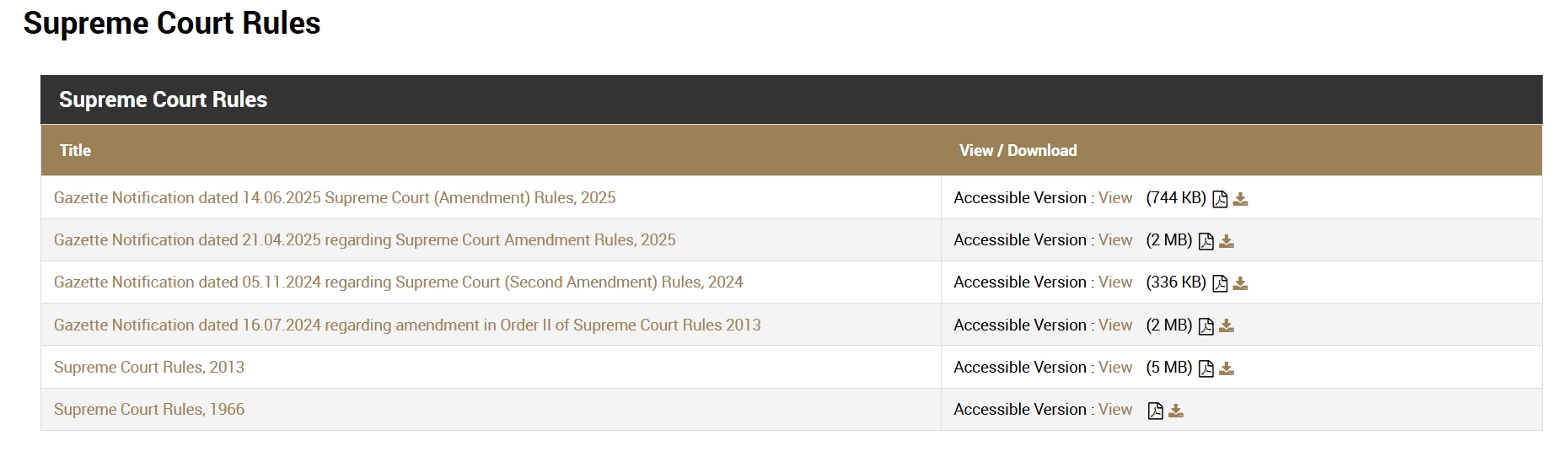
For the Supreme Court rules on how to file cases before the Supreme Court, please read the official notification. Click Here
In simple words, all the documents which prove the grievance, show the violation of the rights, and support the facts which are stated in the writ petition must be filed before the High Court or Supreme Court of India.
Role of the Advocate in the writ petition. Is it Necessary?
An advocate is not legally mandatory but is strongly recommended, as writ matters involve legal questions and court procedures. A trained advocate helps in effective representation. Below are some points of discussion about whether the role of an advocate is necessary or not.
- Not compulsory, but if a person can file the writ petition in person, they are called a party in person.
- An advocate explains the law, rights and remedies.
- The advocate prepared the writ petition in the proper legal format.
- Advocate help in placing the facts and documents correctly
- The advocate presents oral arguments before the judge.
- The advocate ensures the case is heard smoothly and without mistakes.
- Advocates take care of filing, court rules, and compliance.
- Advocates handle the case and increase the chance of proper justice.
In simple words, the advocate is not legally mandatory but strongly recommended because the matter involved in the writ involves legal questions and court procedures. A well-experienced advocate helps in the effective and correct representation before the High Court or Supreme Court of India.
If any queries or information are required related to the above article, please visit the youtube channel and watch the video. Click Here
Home: Click Here