Medical Negligence as Deficiency in Service Under Consumer Protection Act 2019
In this article, we discuss the medical negligence and health insurance disputes, consumer problems, policy terms and conditions, claim process, and the legal remedies under the consumer protection Act, 2019

Medical Negligence as Deficiency In Service Under the Consumer Law and Problem faced by the consumer after taking the medical/health insurance policy
- Meaning of the Medical Negligence
- Who can be held liable for medical negligence
- Rejection of the medical claim
- Delay in settlement of the medical claim
- Hidden clauses in the medical policy.
- Reading the term and condition of the policy carefully..
- reimbursement claim procedure
- filing Complaint with insurance company
- Filing consumer complaint for the insurance disputes
Meaning of the Medical Negligence
Medical negligence means, the situation where the doctor, hospital, health insurance company and professionals fails to provide proper medical treatment, skill or attention that is expected from reasonably competent medical practitioner and the such failure causes harm, injury and death ot the patient. in simple words, when the medical service provider does not act with due care and caution during the treatment, surgery or aftercare, it amounts to medical negligence.
Under the Indian law, patients are considered consumers. Therefore, if there is any deficiency in the medical service, the patient or their family member can seek legal remedy under the Consumer Protection Act 2019. However, not every medical mistake is negligence. Negligence means the negligence is established only when there is a clear breach of duty and direct harm to the patient.
The medical negligence may occur at the different stages of treatment, such as incorrect diagnosis, delay in the treatment, wrong medication, lack of post-treatment care and improper surgery.
Important key point of medical negligence.
- Duty of care. The doctor or hospital has a legal duty to take reasonable care of the patients.
- Breach of the duty. Failure to follow the standard medical practice.
- Resulting harm to the patients. The patient must suffer injury, damages or loss due to the negligence.
- Legal remedy for the patients. The victim can claim the amount of compensation in consumer court under the Consumer Protection Act 2019. (Read the Consumer Protection Act 2019. Click Here)
Note:- This understanding helps the consumer to protect their rights against the medical services’ negligence.
Who can be held liable for medical negligence
- In medical negligence, the liability is not limited only to the treating doctor; the doctor can be held liable if they fail to exercise reasonable care, skill or judgement during the diagnosis, surgery or treatment. The hospital and nursing homes may also be held liable for the negligence. when the treatment to the patients is provided as part of the hospital services. Medical staff, including the nurses, technicians and paramedical personnel, can be liable if their careless acts cause harm to the patients. In certain cases insurance companies may be liable if negligence in claim handling, unjustified rejections or delays in the settlement cause mental or financial loss to the consumer under the Consumer Protection Act 2019. The patients and their legal heirs can demand the compensation from all the parties and they are responsible for the deficiency in medical service.
Rejection of the medical claim
Why the medical claims are rejected and what consumers should do to avoid the rejection of the claim.
Common reasons for rejection of the medical claim.
-
- Nondisclosure of the pre-existing disease
- Treatment during the waiting period
- Disease or treatment is not covered under the policy.
- exceeding the sub-limits.
- incorrect or incompetent documents
- Delay in intimation to the insurance company/TPA
- Treatment taken at the non-network hospital
- Policy lapse due to the non-payment of the premium amount.
- mismatch in the medical record and the claim forms.
- Exclusion clauses mentioned in the insurance policy.
Patients/Consumer should do to avoid the medical claim rejection
- Disclose all the previous medical history truthfully
- Read all the terms and conditions of the policy, exclusion, and waiting period carefully
- Choose the network hospital for cashless treatment.
- inform the insurance company immediately
- Check the room rent
- Ensure the policy is still active at the time of the treatment.
- keep all medical bills prescriptions and reports of treatment
- take the written clarification from insurer before the treatment (if possible)
Important Point: If the medical claim is rejected without any valid reason, the consumer can file a complaint against the insurance company for deficiency in service under the Consumer Protection Act 2019.
oss arising from the use of this information.
Hidden clauses in the medical policy.
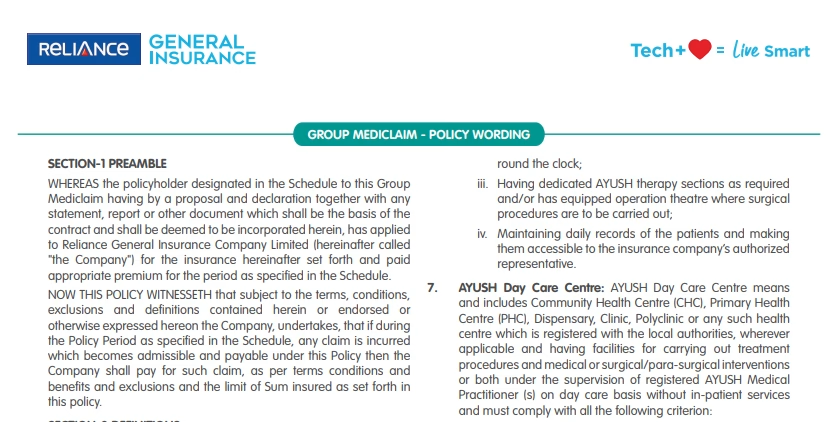
- The medical insurance policy often has hidden clauses that are not clearly explained at the time of the medical claim purchase. These clauses can later affect the medical claim settlement.
- The policy includes waiting period clauses under which certain diseases are not covered for the first 2 to 4 years; the consumer usually discovers this only when the medical claim is rejected. 3
- There are pre-existing disease exclusions, where the insurers deny the claim alleging no disclosure, even for the minor past ailments.
- Sub-limits on treatment or room rent restrict the payment amount, forcing the insured to bear the extra expenses.
- The policy may exclude day care procedures or the consumables like syringes, gloves and masks which increase the hospital bills.
- The clause relating to the network hospital and package rate may reduce the reimbursement without prior clarity.
Important Note:- Such hidden clauses, if not disclosed properly, may amount to the unfair trade practice and deficiency in service under the Consumer Protection Act 2019. Consumers must carefully read the policy and its terms and conditions before buying a medical policy and seek written clarification beforehand.
Every Consumer reading the Terms and conditions of the policy carefully
- Every consumer before purchasing an insurance policy reads the terms and conditions of the insurance policy carefully. It is very important for every consumer/policyholder. It helps the policyholder know what is covered and what is not covered under the policy and many claims are rejected due to the exclusions. waiting periods, or hidden clauses that the insured did not notice earlier and by reading the policy documents, you can know the sum insured and sub-limits, payment clauses and the claim procedure. Terms and conditions also explain renewal conditions, grace periods and circumstances in which the insurer can deny the claim. The policyholder/consumer carefully reads the terms and conditions of the policy and avoids misunderstandings at the time of the claim settlement and protects you from future disputes. It enable you to take decision and ensures that rights of the consumer are safeguarded under the consumer protection Act 2019..
Important Note for the Consumer: Always read the terms and conditions of the policy carefully to avoid the claim rejection and protect your right.
Reimbursement claim procedure
- That a reimbursement claim means you pay the bill to the hospital first and later take the money from the insurance company. Consumers first take treatment in the hospital and pay all the expenses on their own and keep all papers safely, like the medical report, hospital bills, receipt of the payment, prescription of the doctor, discharge summary and information for the insurance company as early as possible. After discharge from the hospital, fill the reimbursement claim properly and attach all documents with the form and submit the form to the insurance company within the time limit. The insurance company will check your documents and policy rules and if everything is correct, the claim will be approved and money will be sent to the account of the policyholder as per the policy. If any documents are missing, the claim may be delayed or rejected.
Important Note: Always inform the insurer on time and submit all the documents correctly; otherwise, the reimbursement claim may be rejected.
Filing consumer complaint for the insurance disputes
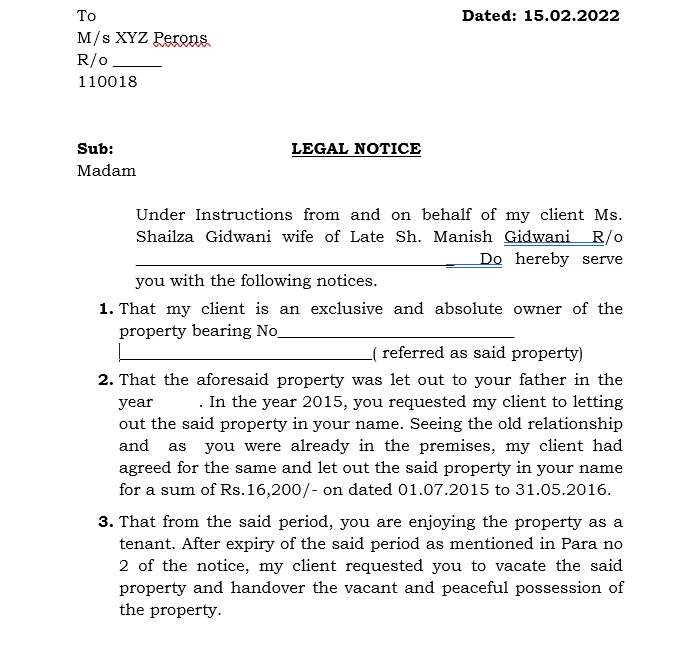
If the insurance company rejects the claim of the consumer or causes delay without valid reasons, the policyholder/consumer can file the consumer complaint before the commission. But first the consumer sent the written complaint or legal notice to the insurance company, in which they explained the issues/grievance. if the issue is not resolved. The policyholder can file the consumer complaint before the consumer commission and the complaint may be filed at the district, state and national level depending on the claim amount. The consumer must attach the copies of the insurance policy, claim form, rejection letter, medical bill and other relevant documents with the complaint. and the policyholder/consumer clearly mentions the facts of the case, deficiency in service and relief sought. and there is a time limit of two years from the cause of the action to file the consumer complaint. The consumer can file the complaint personally or through an advocate/lawyer. The Consumer Commission has the power to order the claim payment, compensation and cost. (For more information visit official website of e-jagtiti.gov.in.)
Important point for filing the consumer complaint.
- If the insurance medical claim is rejected or delayed without proper reason, the consumer can file the complaint before the consumer commission.
- Write the complaint or legal notice through the advocate
- if the issue of the consumer/policyholder is not solved, approach the appropriate consumer commission (District, State and National Commission as per claim amount)
- Attached is the copy of the policy, claim form, rejection letter and email proof with the complaint.
- Clearly mention the facts, the deficiency in service in the consumer complaint and the relief demanded.
- Consumer complaints must be filed within 2 years from the cause of the action.
- The filing procedure is simple, quick and low cost.
- The consumer/policyholder files the consumer complaint personally or through an advocate.
- commission can order the claim payment, compensation and costs.
Important Note for the Policyholder: Always keep all policy papers and claim documents safe, raise your issue/grievance in writing first and file the consumer complaint within 2 years to protect your right.
For more updates, visit Home. Click here.
Disclaimer
The content on e-jagriti.com is for general legal awareness and educational purposes only. It does not constitute legal advice. Readers should consult with a qualified legal professional advocate/lawyer before taking any action. e-jagriti.com is not responsible for any